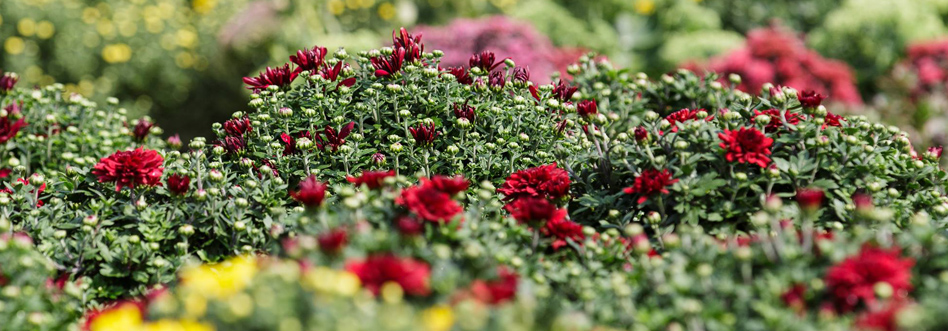
Fall is officially in the air! Our fall mums have arrived and are ready for your home. From tricolor, pink, red, white, orange, and purple, the color combinations are endless. Stop in today to spruce up your home for fall!
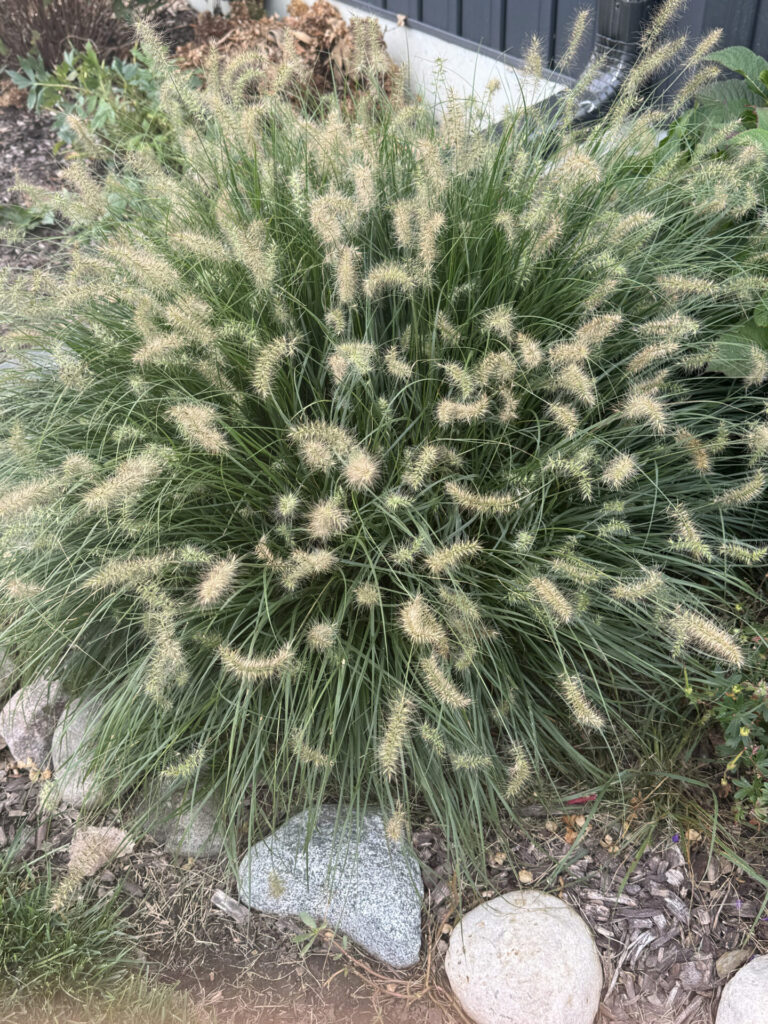
Then plant the Little Bunny Dwarf Fountain Grass, the smallest of all fountain grasses. If you are looking for a small plant, this may be the one you are looking for. Basically it is maintenance free except for cutting it back in either fall or spring. Otherwise it stays a nice green and just looks terrific from spring to fall. It grows 10 to 12 inches tall and wide, featuring fluffy, buff-colored plumes, with fine green summer foliage that turns golden-russet in autumn. The “bunny” plant has a high tolerance for drought once established. It blooms late summer and lasts through fall. This grass likes full sun, however the pictured bunny grass below is planted on the east side of a house and does wonderful. It works well with red or purple coral bells, in front of taller grasses, and in masses for an unusual look. Note: if this grass eventually gets a bare center, leave it as it will probably fill out once it starts growing. This picture was taken on August 15, 2026.
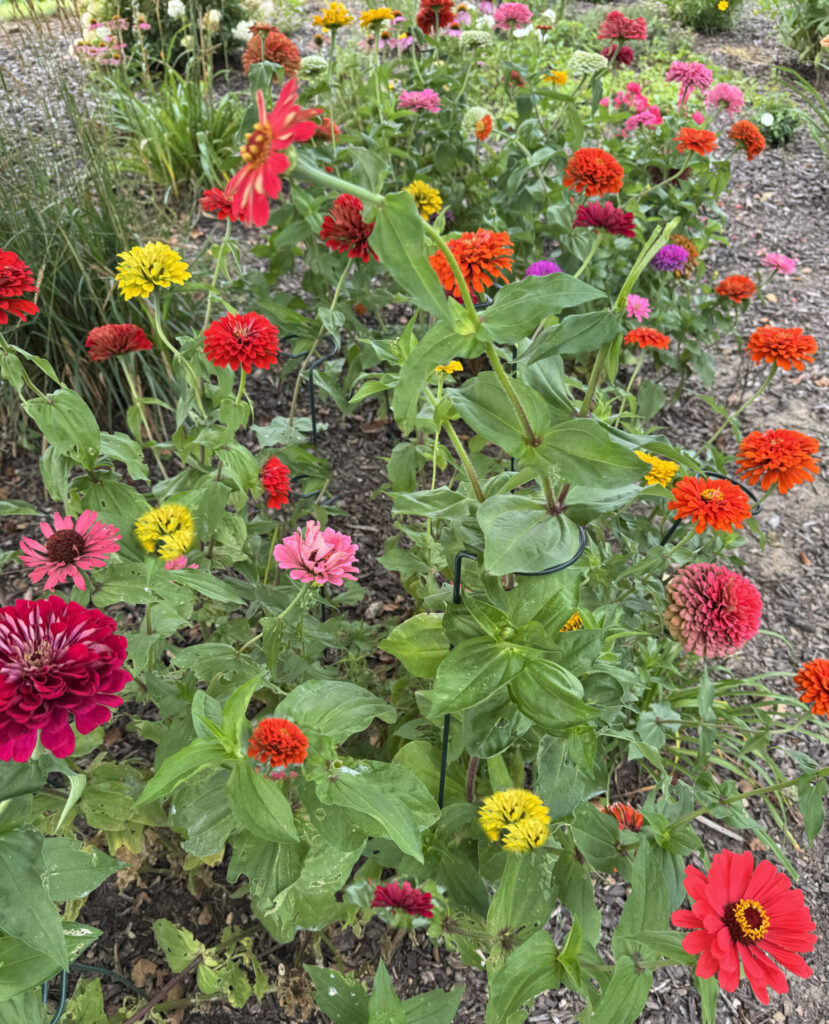
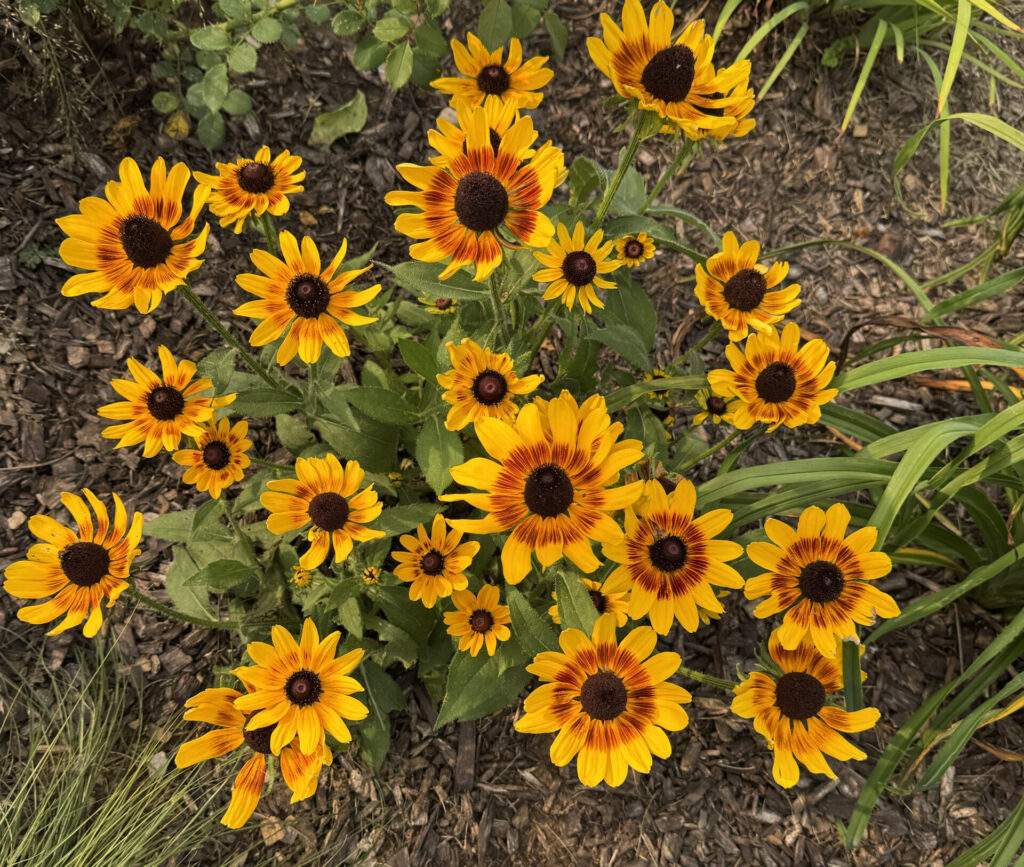
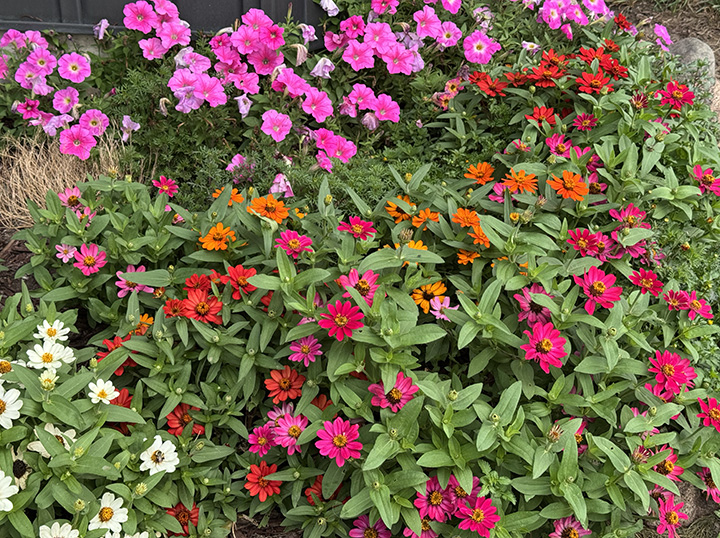
This time of year our flower gardens are probably starting to look dull. Cone flowers are no longer vibrant, phlox is just about done blooming, day lillies are done except for the rebloomers, etc. Here are some ways to liven up your garden for next year at this time. Zinnias (especially State Fair) and marigolds are easy to grow and do they ever add color to the gardens. Marigolds are mostly orange or yellow, but the flowers are plentiful. Plant these annuals in masses if possible. Zinnias have reds, yellows, pinks and are beautiful. Plant six, ten, fifteen or more together for a real show. Another way to add color to your garden is to place some pots of plants throughout. With the use of annuals, you can have a beautiful bright garden into September. Trees Todays carries these annuals in spring of the year. So next year remember to stop in, in mid-spring, and purchase some of these plants for a radiant garden in August. Below are pictures of some of the flowers mentioned in this article with plants purchased from Trees Today.
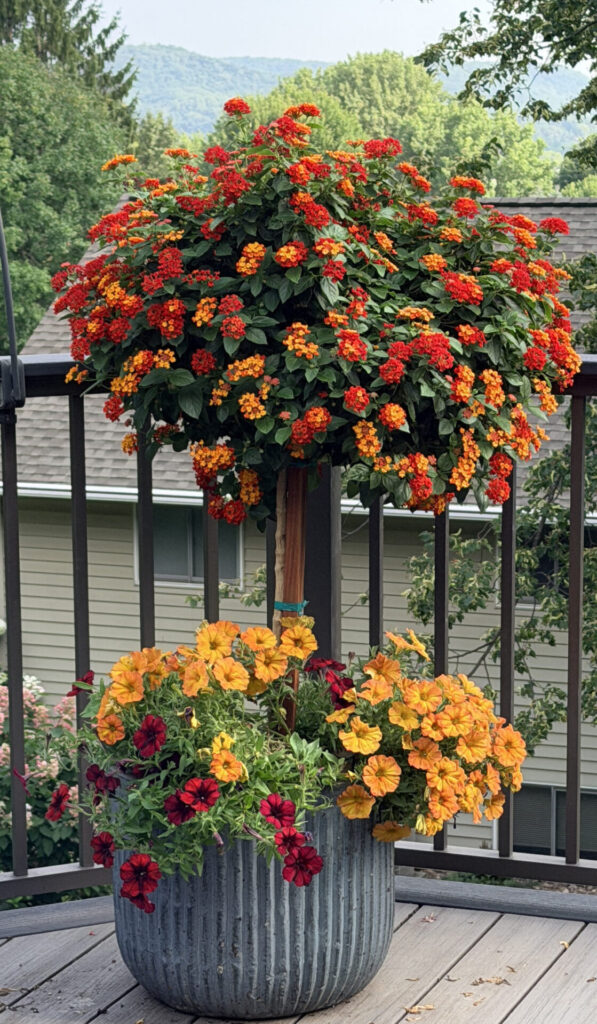
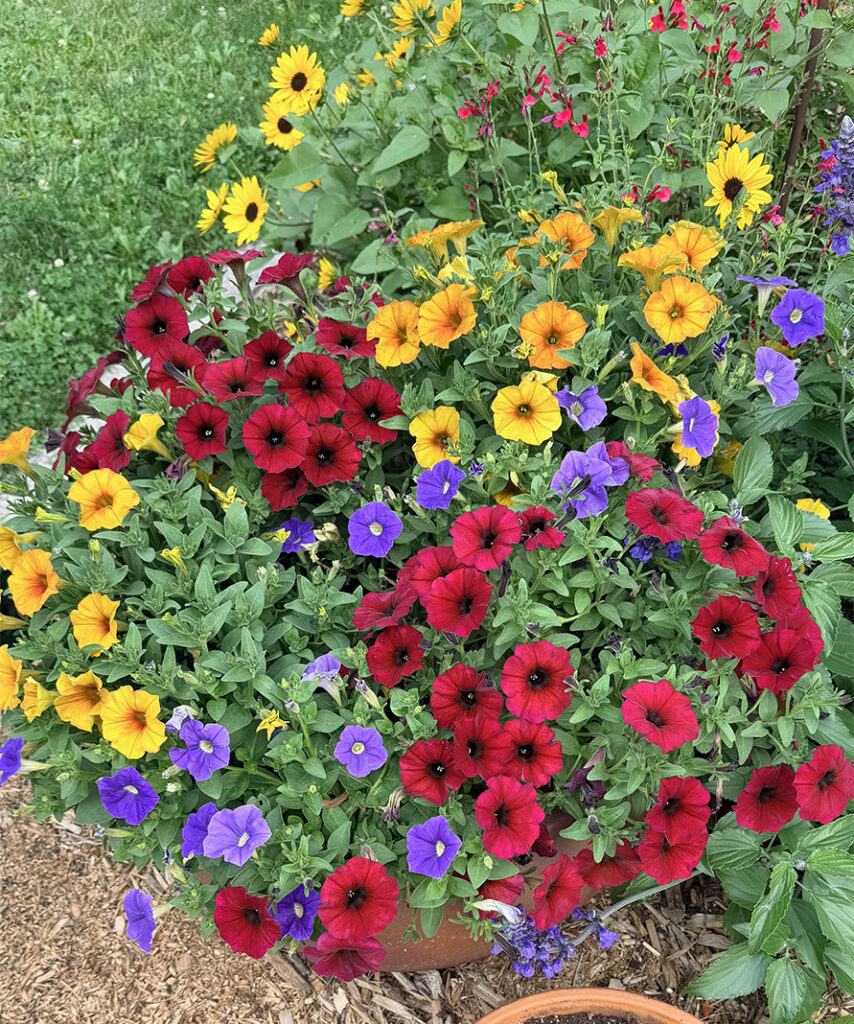
If you have a petunia basket or any petunias, now or very soon they will start getting leggy and tired looking. Liven them up now and they should be happily blooming into fall. Deadheading petunias is a tiresome job. An easier way now is to just cut the plant in half. Grab a stem and cut it back about 50% right above a leaf node, or the spot where the leave meets the stem. Fertilize now with a liquid fertilizer, like Miracle Grow. In a couple weeks you should start seeing new growth and soon after blossoms. Potted petunias can be liquid fertilized every week where as if in the ground, every couple of weeks should suffice. If possible now, start clipping off the spent blossoms. Also make sure your petunias get 6 hours of sun a day and if necessary, water them every day. The soil should be damp and never left to dry out. I your petuni arei n a pot and it is starting to pull away from the sides, place the whole pot in a container of water for 15 to 20 minutes. This will help getting your soil to hold water again. Petunias like fertilizer. Now is the time to start using liquid fertilizers, like Miracle Grow. Fertilize potted plants once a week, outdoor plants fertilize every 2-3 weeks.
Note: If yellow leaves are appearing on your petunias but the veins are still dark green, then your plant probably needs chelated liquid iron. All plants that have yellowing leaves but the veins are still dark green, they should benefit from adding iron to the soil.
By doing a little work you can often get some perennials to rebloom by removing the spent flowers before they set seed. Once seed has set, it is probably too late for a rebloom. Two methods done for a rebloom are: 1) Cutting the entire plant, flowers and foliage back by 1/3 to 1/2 after most of the flowers are done blooming. Do not wait until they seed even if this means cutting off some new flowers. 2) Deadheading. There are two ways to deadhead. If the flower stem is soft you can just pinch the flower off. If the flower is on a stiff stem, cut the stem back to where a new set of leaves is formed or at least half way down. After you have done this, give the plant a small amount of fertilizer that has the middle number the lowest, (example 5-10-5) and water it. Below is a list of flowers that usually will rebloom.
Cutting Back the Plant: Nepeta (cat mint)
Salvia (sage)
Tickseed (Coreopsis)
Cranesbill (hardy geraniums)
Scabiosa (pin cushion)
Gaillardia (blanket flower)
Achillea (yarrow)
Helenium (sneezeweed)
Note: Deadheading will encourage more blooms on any plant because by removing spent flowers you are now giving more energy to the plant to produce more blooms.
When we plant for pollinators, we all win! Trees Today Nursery has many, many pollinator plants.
We want to help you bring your garden to life this summer with happy bees, butterflies, and birds.
Enter Monrovia’s Bee A Winner Pollinator Plant Giveaway for a chance to win a free pollinator-friendly plant from Monrovia.
To enter, visit monrovia.me/bee. Be sure to select Trees Today Nursery in the list of participating locations. The entry period ends June 14.
Don’t miss your chance to enter the Grand Prize Giveaway for a $500 Monrovia shopping spree at our location! Just take a picture of our Bee a Winner display, post it on Instagram with the hashtag #BeeAWinner, and mention @MonroviaPlants in your post. For more details and entry options, visit Monrovia.me/win.
Winners will be selected by random drawing and announced the week of June 15. Visit our store to collect your 1-gallon pollinator-friendly plant from Monrovia if you are one of our lucky winners!
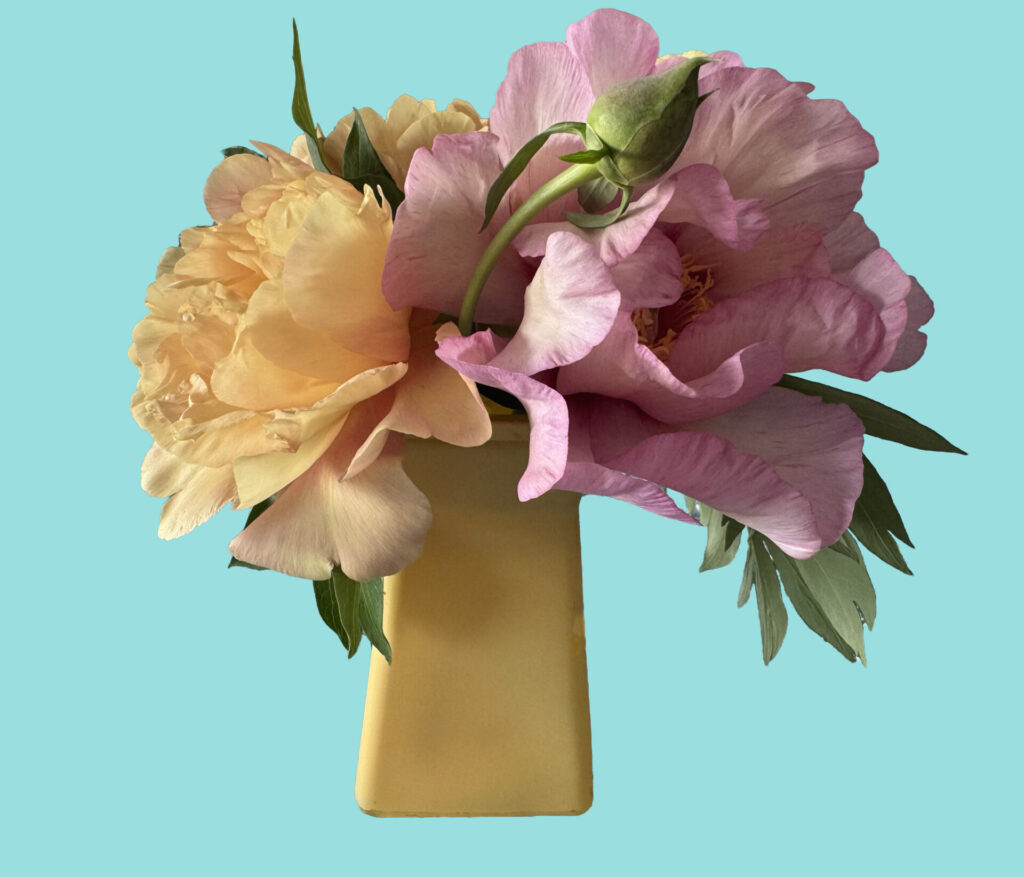
Those of you who planted Itoh peonies a couple years ago should now be rewarded with 3 foot mounding bushes and lots of huge blooms. It is not uncommon to have over 50 blossoms on a three year old plant. Yes, they are expensive but they should easily last over 30 years if planted in the right conditions. These peonies have sturdy stems so they do not flop over in rain and wind. Also, because they do not bloom all at once, you will have blooms for 3 to 4 weeks. Flowers are huge, 5 to 9 inches across. The colors range from white to yellow to peach to red with various shades in between. Maintenance? Very little which consists of cutting the plant back in late fall to 2-3 inches. The shrub keeps it green leaves and looks good through out the season. The photo below of Itoh peonies was cut on May 21st.
Crab apple trees are Spring! Most of us love spring as it is such a wondrous site to see the green, green grass and all the different colors of crab apple trees blooming after our long winter. Crab apple trees range in shades from white to dark pink. Some do not produce berries, some will drop their berries in fall and some hang onto their berries into winter, which is wonderful food for the robins when they arrive. Crab apple trees might be in a pillar form and some may spread and even some that will stay short but spread, like those in a Japanese garden. Gradually crab apple trees are arriving at our nursery. Following is a photo of a Showtime crabapple that was taken on April 16, at our nursery.
If you click on any of the following crabapple trees you will be taken to our site describing that tree. If you are interested in a particular tree, please call our office at (608 783-7333) to verify that we have it in stock.
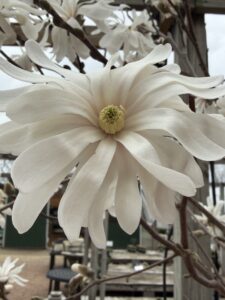
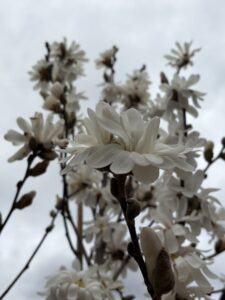
Spring is here and with that comes one of the first flowering trees of the season, Magnolias. Magnolias bloom profusely in April with either pink or white flowers. At Trees Today we have the Royal Star Magnolia in stock now. Stop in today while they are blooming and still in stock.
If you were fortunate to plant some hellebores last year, you should be enjoying their blooms now or shortly. They are also called Lenten Roses because they usually have buds or blooms during the Christian season of Lent. If possible, plant them so you can look out the window and see the blooms.They are a shade plant, however in winter they like sun. One of the best ways to achieve this is to plant them under a tree so the leaves shade them in summer but in winter the sun shines through the tree limbs. Mulching the plant in winter is also beneficial. After they are done blooming, prune the bloom stalk to the ground which encourages the plant to produce new growth. They are hardy to Zone 4. Our nursery carries hellebores, but they may not be in stock all the time and occasionally we get other varieties. Unfortunately we do not have photos of the three that we will be carrying, however if you google them you will see photos. They are: Frostkiss Cherisa, Frostkiss Glenda’s Gloss and Frostkiss Vibey Velevet.
Perhaps this year you would like to change the way your gardens look. Then now is the time to think about changing the design of your gardens. There are so many ideas available. Searching the internet and looking at Pinterest for ideas are good places to start. Also take a look at Monrovia’s design trends. Just click on design
If you would like to have more quality apples on your tree, then you need to prune your tree properly which will improve the quality of the fruit through better air flow and sun penetration. It is recommended that you never remove more than 1/3 of the total canopy in a single year. Click on the red text to see illustrations and learn more about pruning apple trees