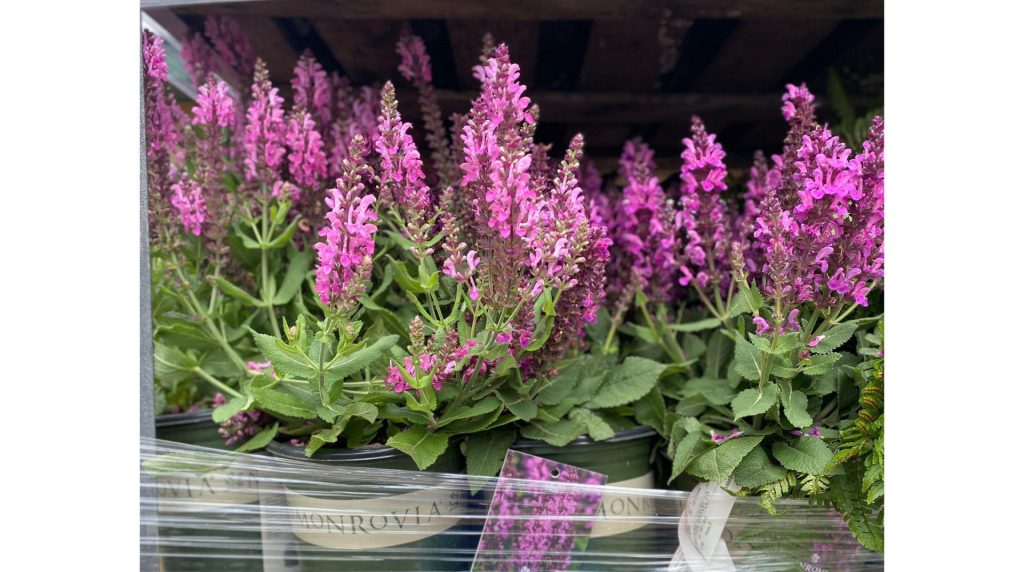
The heat is on and rain is nowhere to be seen! The challenge to keep the landscape looking nice is a battle. Leaves droop, blooms fade, and plants look sad due to the pressure of the intense heat. Choosing plants that can weather the intense summer elements is key. Here are some of our resident summer survivors.
Autumn Joy Sedum
by Trees Today Nursery
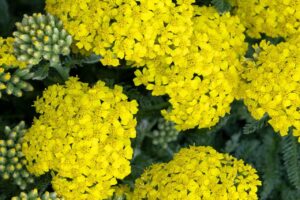
Achillea Desert Eve Yellow Yarrow
courtesy of Monrovia Growers
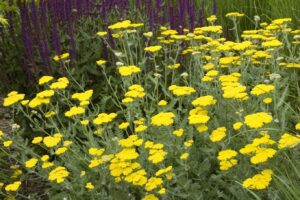
Moonshine Yarow
courtesy of Bailey Nurseries
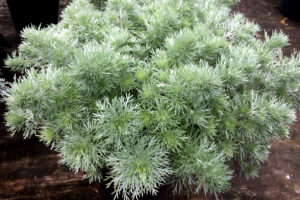
Artemesia
by Trees Today Nursery
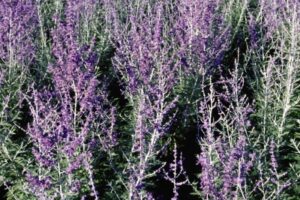
Russian Sage
courtesy of Bailey Nurseries
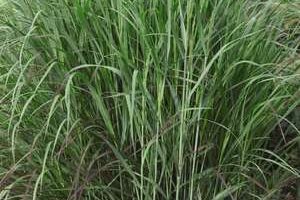
Shenandoah Switchgrass
courtesy of Bailey Nurseries
There are some great summer survivors in stock at the nursery ready for a new home in your landscape. Stop in today to add them to your collection.
Do you secretly compete with your neighbor on who has the best looking yard? Maybe who’s yard looks more colorful the latest into the fall? Well do we have the best kept secret that’s not so secret for you. GRASSES!
Grasses are a great addition to the landscape because there are so many choices to pick from. There are tall grasses and short grasses, and red grasses and blue grasses. There are small flowers and big flowers and grasses for sun and grasses for shade. How many grasses can there be? No matter your landscape needs, there is most likely a grass that will fill your needs.
Take a trip to the garden center and ask our staff about their favorite grass and they can show you the best fit for your landscape.
What is deadheading and why deadhead? It is simply removing the old faded and spent flowers from a plant to encourage it to bloom longer. Once an old flower produces seed, the plant generally stops blooming. To deadhead, simply snip off the old flower. Deadheading to some people is a tiresome job, to others it may be therapy, and to others they simply enjoy being in the garden and love the look of clean plants. So, IF you are tired of deadheading, here are a few plants that do not need dead heading. Some ANNUALS are Angelonia, super petunia, biden, calibrocha, impatien, begonia, lantana, lobelia, and salvia. Some PERENNIALS include coneflower, hydrangea, astilbe, blanket flower, peony, bleeding heart, columbine, daylilie, modern rose shrub, hyssop, black eyed Susan, heuchera, and sedum. This is not an all inclusive list but contains the most common flowers in our area. You still may deadhead these if you like the look of a clean plant. If you are unsure, try googling the flower as the internet is a wealth of information.
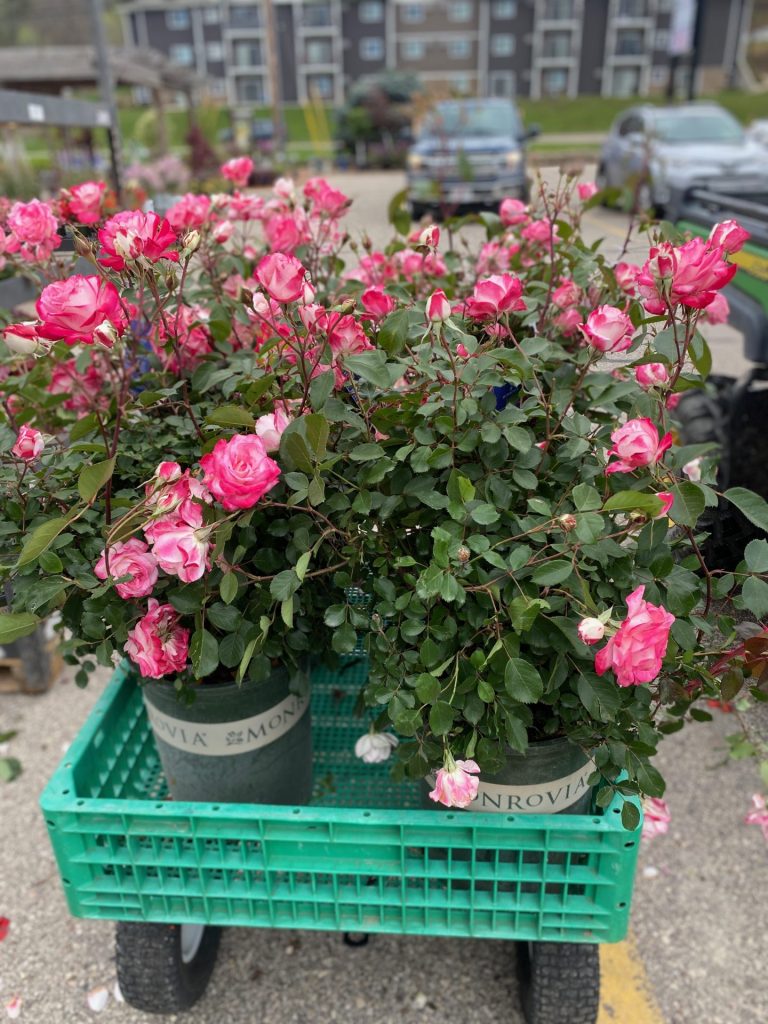
These are just a few words to describe what our nursery looks like. It is now filled with plants, shrubs and trees and some blooming plants to feed the hummingbirds. We have lantana trees and lantana pots to give the hummingbirds some appreciated nectar when they arrive here after their long journey. Chances are good that if you put a lantana tree or pot on your deck or wherever you sit outside, hummingbirds will fly to it. We also have blooming roses that are quite spectacular. There are too many things to describe so we suggest you stop in and check us out.
There are many reasons. The soil is still warm enough to encourage roots to grow whereas in spring the soil is still warming up from the winter. Due to the fact that the plant no longer produces many flowers or foliage, the plant is able to spend a lot of its energy building roots. There is less shock and stress to the plant as it is about to go into dormancy. Planting in fall gives your plant a 6 month head start against spring plantings. Your plants will have less insects to deal with. Then there are the benefits of less weeds and less watering.
Fall is also a time to divide some perennials. Some perennials that benefit from dividing in fall are asters, native coneflowers, monardas (bee balms), day lilies, liatris, peonies, black eyed susans, garden phlox and creeping phox, siberian iris, bearded iris and veronica. This is not an all inclusive list but tries to list the most common perennials. If you are unsure if your plant should be divided in fall, google the plant or talk to a knowledgeable person.
Fall planting is not just for perennials, but shrubs and trees also benefit from fall planting.
Our nursery still has lots of perennials in stock available for immediate planting. Stop in before fall turns into winter.
Our staff is very talented with putting together flowers and shrubs that go together. If you need help, they are here to help guide you to choose plants that go together not only in appearance, but plants that have the same requirements for water, soil and light. They are more then happy to assist you. Below are two designs they did. They are very conscience in determining how colors blend together.
Display features Congo Line sedum, Russian sage, Scotch moss and Evolution Fiesta coneflower.
Fountain, Scotch moss, Pandora ligularia and Younique silvery pink astilbe.
Summer is officially here, and our tables are full of coneflowers. Pinks, purples, reds, oranges and yellows, so many to choose. Stop in today to fill your yard with bright, long-lasting color!
Good news. Our perennial tables are full again with a variety of perennials and our shrubs and trees have been replenished. Plus, we are getting another truck load of plants in this week, the week of June 18th. We should now have your favorites in stock, from grasses to cone flowers, from dogwood to oak trees and everything in between. We still have a good selection of annuals at 50% off. Stop in before our selections become limited.
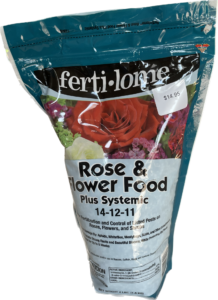
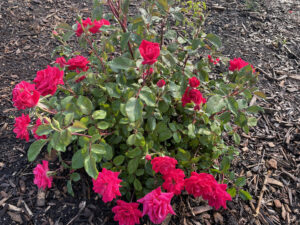
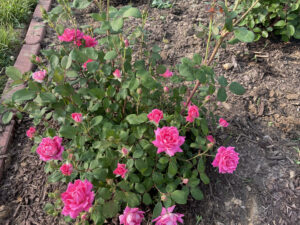
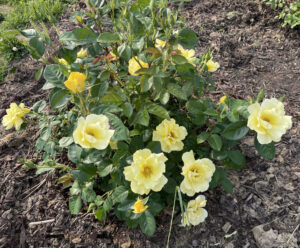
Do your roses look as good or better then the following pictures? If not, perhaps next year, or even this year yet, give them a scoop or two of Fertilome Rose & Flower Food. I was always skeptical about using fertilizer, except for Miracle Grow, as a waste of money. Well this spring when it was time to prune my roses, I put two scoops of this fertilizer by each rose bush and what a difference! My roses, and I have about 15, all look wonderful this year and as of today, June 5th, they have started blooming. I also used this same fertilizer around many of my perennials and they, too, are looking fantastic. At first I was wondering why everything looks so good this year, then I remembered that I used this fertilizer. Well from now on I am a believer and will be using this every spring and whenever else I think a flower needs a boost. It is recommended to reapply every 30 days. Stop in at Trees Today and pick up a bag of this fertilizer. It is a systemic, meaning that it is taken up by the roots of the plant, PLUS it is an insecticide.
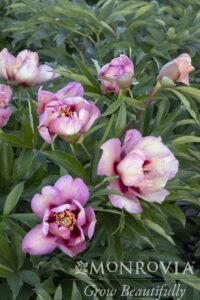
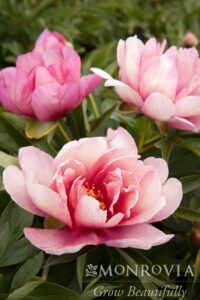
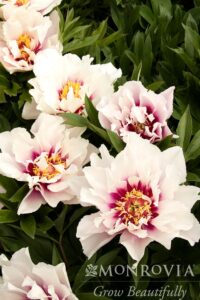
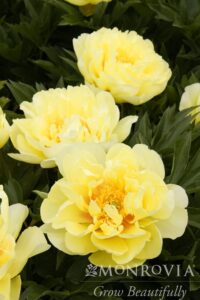
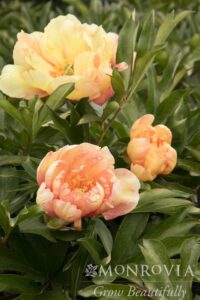
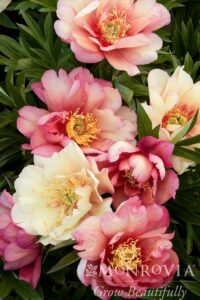
Have you seen the new Itoh peonies yet? They are a cross between the tree peony and the common herbaceous peony. The main differences are that the Itoh stems are much sturdier, the Itoh’s bloom for 3-4 weeks and can have 30-60 blossoms per plant and up to 6″ wide, depending on the variety. Itoh blossoms are exquisite, coming in more colors like yellow, apricot, coral, purples and then the usual array of pinks. If Itoh flowers are protected from the hot afternoon sun, they can last as long as 14 days in your garden. They are very fast growing, maturing to about 3 ft tall by 3-1/2 ft wide. Planting in the morning sun is preferable although they can be planted in filtered to full sun. The lush mound of Itoh foliage is another plus as it makes a nice looking shrub and often turn color in fall. Deer generally avoid them. It is recommended that for a real WOW, plant 3-5 in a cluster although one single specimen alone, or in a pot puts on quite the show also. The downside is that they are more expensive then the herbaceous peonies, but once established they viturally are carefree and can last up to 50 years. Consider them an investment.
We have prepared a chart for you in hopes it may help you determine which perennials you should cut down before winter. If you still are uncertain, you can always “google” your perennial for more information.
Click on the “cut back perennials in fall or winter” below and the chart should appear.
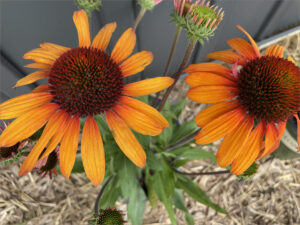
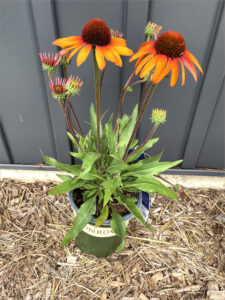
Almost every week we get in around 200 coneflowers. They are our number one perennial seller. Customers flock to get them as they really perk up a garden. The colors they come in are amazing: the purples, pinks, oranges, whites, reds and it seems like each week we get a new variety. The one that really struck our eye in this last shipment is the Tiger Eye coneflower. It is just a wow orange with a rustic brown center. This is a Zone 4 hardy and reaches 18″ tall and wide. If you want one of these we advise you to stop in very soon as we are certain they will not be around long.




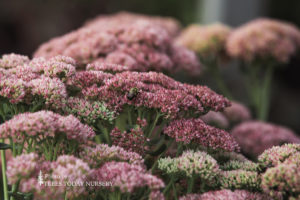 Autumn Joy Sedumby Trees Today Nursery